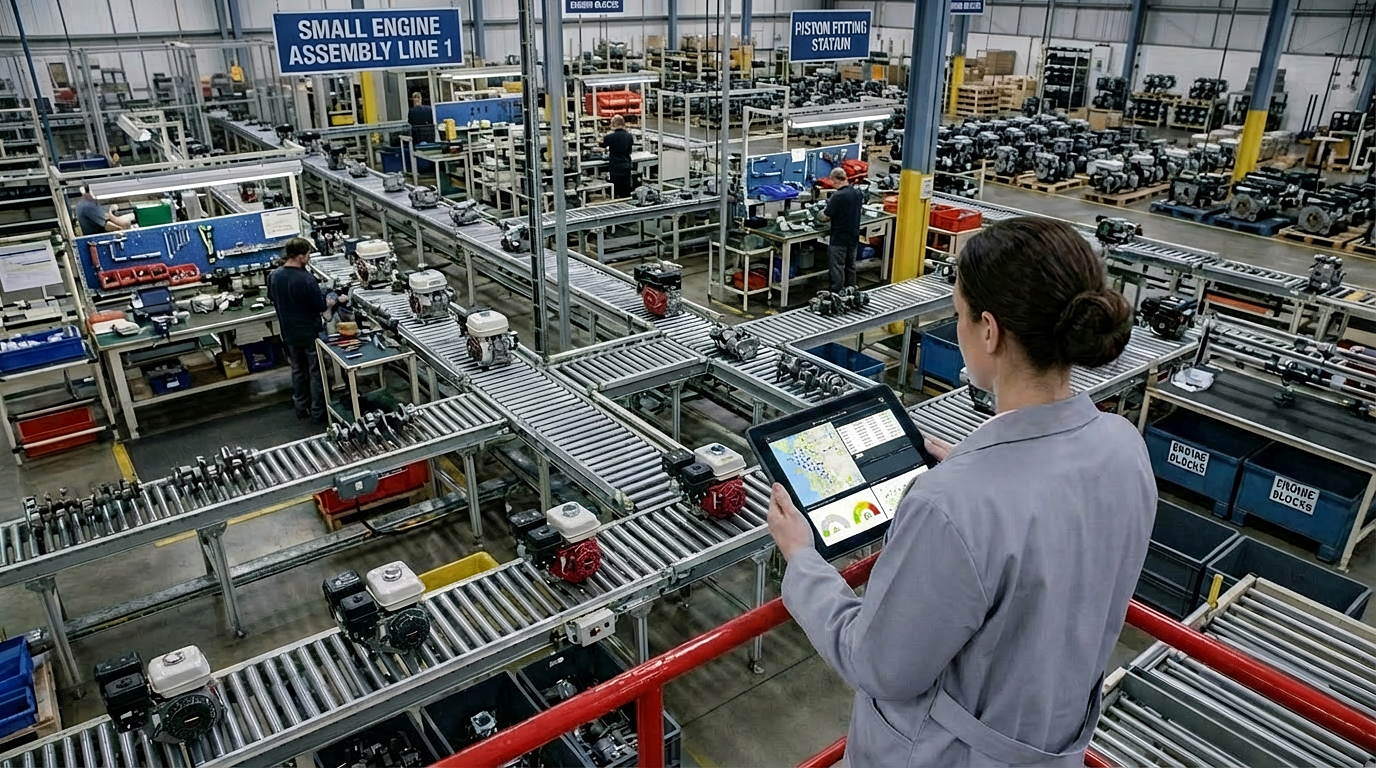
Industrial IoT is creating new opportunities for manufacturers to improve processes and gather additional insights that were not previously available. Being able to remotely monitor every part of an industrial facility means being able to vastly improve operational efficiency and product quality—but IIoT implementations are challenging for even the most resourceful of companies.
Like many manufacturers, Woodward had an abundance of operational machine data aggregated across multiple systems, including:
- Product Lifecycle Management (PLM)
- Enterprise Resource Planning (ERP)
- Manufacturing Execution System (MES)
However, it lacked the processes needed to make that data actionable. The company also wanted to improve worker performance, training, and operations by providing application screens that could help workers execute work orders in a more streamlined way.
When a process error caused the PLM and ERP systems to fall out of sync, workers had to spend valuable time resynchronizing databases across the organization, significantly affecting productivity.
A simpler path to connected operations
To improve standard work and visual management in its operations environment, Woodward needed a solution that could automate manual tasks and data entry while presenting manufacturing process data through a single user interface.
After experiencing MES implementations that could take multiple years and cost several million dollars, the company sought a simpler, faster approach to pooling and distributing data. It wanted to:
- Train operators quickly on new processes
- Shift resources based on production needs
- Give workers easier access to work orders and operational information
- Help employees act on information in real time
- Increase workforce flexibility across production operations
A single-platform approach would allow employees to access the information they needed regardless of department or location, helping them work more efficiently and move more easily from one type of production operation to another.