Manufacturing Operations Management software
Connect production planning, execution, people, assets, and performance with manufacturing operations management software that helps manufacturers improve productivity, quality, visibility, and agility across plant and enterprise operations.
 Talk to an expert
Connect planning, execution, and improvement

Plan smarter. Execute consistently. Improve continuously.
Manufacturing operations depend on the coordinated flow of information between planners, operators, equipment, production systems, and business teams. Velotic manufacturing operations management solutions connect these functions to improve execution, production visibility, workforce productivity, asset utilization, and continuous improvement.
- Manufacturing execution and production control
- Finite-capacity planning and production scheduling
- Quality management, compliance, and product genealogy
- Production performance and continuous improvement
- Connected worker guidance and digital work instructions
- Asset monitoring, utilization, and operational visibility
- Centralized manufacturing dashboards and applications
- Scalable capabilities for plant and enterprise operations
Manufacturing Operations Management capabilities
From production planning and manufacturing execution to connected worker guidance, asset monitoring, operations intelligence, and continuous improvement, Velotic provides the capabilities manufacturers need to manage and optimize production.
Manufacturing execution
Manage production orders, routes, materials, equipment, labor, processes, and operator activities in real time to improve control, consistency, throughput, and production visibility.

Production planning & scheduling
Create realistic production schedules based on demand, capacity, materials, equipment, labor, and operating constraints—and quickly understand the impact of changing conditions.

Quality, compliance & traceability
Digitize quality checks, specifications, genealogy, production history, and electronic records to improve process control, support compliance, and trace products across manufacturing.

Production performance management
Measure production losses, identify bottlenecks, prioritize improvement opportunities, and track whether corrective actions deliver measurable operational and financial results.

Connected worker enablement
Deliver digital work instructions, contextual production information, and guided workflows at the point of work to improve productivity, quality, training, and consistency.

Asset monitoring & utilization
Monitor equipment performance, status, utilization, and operating conditions in real time to identify underused capacity, production constraints, and asset-related losses.

Operations intelligence & visualization
Bring manufacturing information from MES, historians, equipment, ERP, and other systems into centralized dashboards and applications tailored to different operational roles.
Continuous improvement
Connect production data with structured problem solving so teams can identify losses, prioritize actions, measure progress, and validate improvements across lines and sites.
Cloud or On-Premises MES? Look beyond the initial cost.
The right MES deployment strategy depends on more than upfront software and infrastructure costs. Explore how cloud and on-premises approaches compare across total cost of ownership, implementation risk, scalability, security, upgrades, and long-term operational agility.
Read the white paperResources
View allAll Resources
-
Webinar: Modernizing Intelligence Unleashed: Building the Data Foundation for AI-Powered Manufacturing
Webinar hosted by Packaging Strategies - learn how to establish a scalable data foundation that supports predictive insights, operational visibility, and future AI initiatives without requiring a complete technology overhaul.
Webinar -
Enhancing efficiency with Proficy Tracker
Explore how to optimize your operations, increasing throughput in conveyor and assembly manufacturing with the Velotic Proficy Tracker.
Data sheet -
Life is better in the cloud for process and discrete
Learn how Cloud MES helps manufacturers do more with less.
Infographic -
Unlocking food safety: understanding FSMA 204
The Food Safety Modernization Act (FSMA) 204 will significantly change how food manufacturers track products across the supply chain. With compliance requirements taking effect in July 2028, manufacturers of all sizes need to begin preparing now. Podcast series - episode 2 of 3
Video
-
Unlocking food safety: understanding FSMA 204
The Food Safety Modernization Act (FSMA) 204 will significantly change how food manufacturers track products across the supply chain. With compliance requirements taking effect in July 2028, manufacturers of all sizes need to begin preparing now. Podcast series - episode 3 of 3
Video
-
Unlocking food safety: understanding FSMA 204
The Food Safety Modernization Act (FSMA) 204 will significantly change how food manufacturers track products across the supply chain. With compliance requirements taking effect in July 2028, manufacturers of all sizes need to begin preparing now. Podcast series - episode 1 of 3
Video
-
SaaS vs. on-prem MES: driving smarter outcomes for F&B and CPG manufacturers
This webinar explores the practical business and operational implications of SaaS versus on-premises MES deployment models.
Webinar -
Everything you need to know about manufacturing execution systems
White paper -
Lean manufacturing in the age of the industrial internet
Connect machines and devices with people to access operational insight
White paper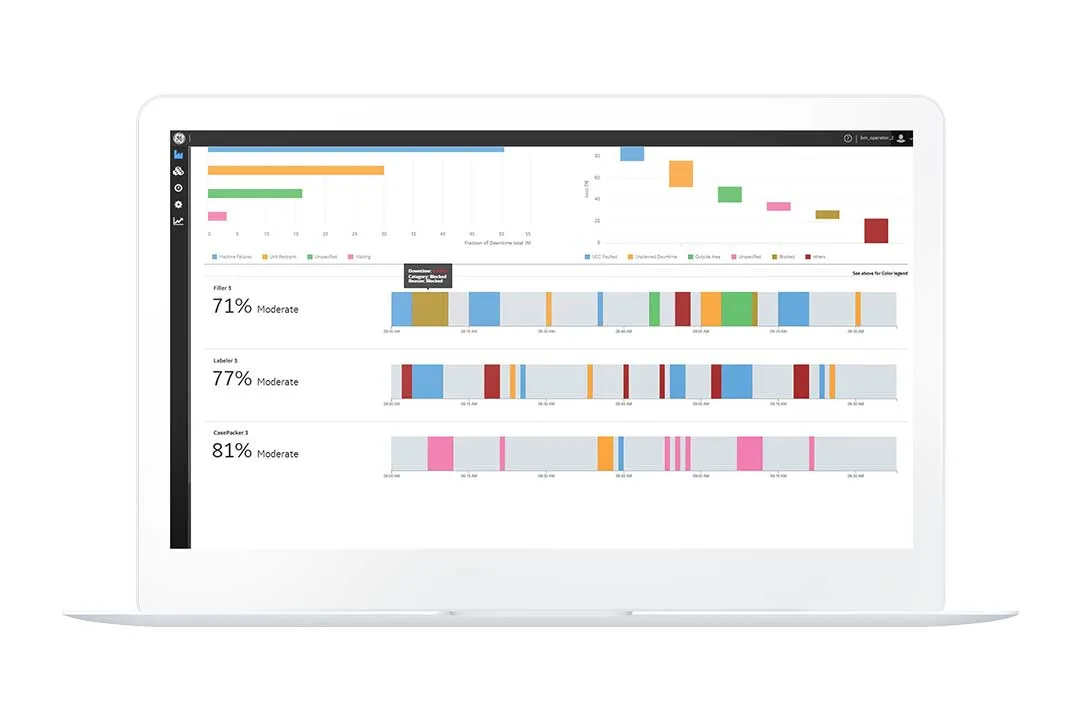
-
How Camuzzi Gas modernized critical infrastructure with Velotic's Proficy software
How Camuzzi Gas modernized critical infrastructure with Velotic's Proficy Software
Video
Blog
-
Rethinking MES deployment: cloud vs on-prem cost, risk & TCO explained
Blog -
Unlocking Strategic Potential in Food & Beverage and CPG: Redeploying IT Resources After the Cloud Transition
Unlocking Strategic Potential in Food & Beverage and CPG: Redeploying IT Resources After the Cloud Transition
Blog -
Trusted MES Tools for Full Traceability and Genealogy in Regulated Manufacturing
Learn how MES tools support full traceability and genealogy with forward and backward lineage, batch records, audit trails, recall support, and compliance readiness.
Blog -
How structured scheduling delivers fast time-to-value in manufacturing planning
For many manufacturing companies, investing in digital production planning is driven by a clear ambition: improving visibility, strengthening decision-making, and gaining better control across operations.
Blog -
Your Choice of Business Systems Has a Direct Impact on Manufacturing Efficiency
Production planning is at the heart of manufacturing operations. It determines how effectively companies can utilize capacity, manage materials, coordinate resources, and deliver products on time.
Blog -
Proficy Smart Factory MES Implementation: Overcoming Complexity & Driving Fast Adoption
Reduce MES complexity and speed adoption with Proficy Smart Factory. Explore implementation phases, real-world results, and enterprise scaling strategies.
Blog -
Why SaaS is the Future of Manufacturing Scheduling – and How Proficy Scheduler Ultimate Delivers It
Manufacturers are rapidly embracing digital transformation, and one area seeing significant change is production scheduling.
Blog -
Unlock Hidden Profits in Manufacturing with Smarter Production Scheduling
In this blog, we show how better production planning with Proficy Scheduler drives measurable financial results by improving eight key value drivers in manufacturing.
Blog -
What is the Difference Between Production Scheduling and Production Planning?
Discover the differences between production scheduling & production planning in functions, and how they contribute to efficient manufacturing operations.
Blog -
What is Manufacturing Operations Management (MOM)? – A Comprehensive Guide
Read this article to understand what Manufacturing Operations Management is and why it is crucial for any successful manufacturing operations.
Blog
Video
-
Unlocking food safety: understanding FSMA 204
The Food Safety Modernization Act (FSMA) 204 will significantly change how food manufacturers track products across the supply chain. With compliance requirements taking effect in July 2028, manufacturers of all sizes need to begin preparing now. Podcast series - episode 2 of 3
Video
-
Unlocking food safety: understanding FSMA 204
The Food Safety Modernization Act (FSMA) 204 will significantly change how food manufacturers track products across the supply chain. With compliance requirements taking effect in July 2028, manufacturers of all sizes need to begin preparing now. Podcast series - episode 3 of 3
Video
-
Unlocking food safety: understanding FSMA 204
The Food Safety Modernization Act (FSMA) 204 will significantly change how food manufacturers track products across the supply chain. With compliance requirements taking effect in July 2028, manufacturers of all sizes need to begin preparing now. Podcast series - episode 1 of 3
Video
-
How Camuzzi Gas modernized critical infrastructure with Velotic's Proficy software
How Camuzzi Gas modernized critical infrastructure with Velotic's Proficy Software
Video -
How Cascades Uses MES Software to Drive Real-Time Visibility, Quality & Continuous Improvement
Video -
INS3 partner success story | how Proficy helps manufacturers grow
Watch how INS3 uses Proficy to help manufacturers improve quality, reduce costs, accelerate digital transformation, and achieve long-term business growth.
Video
-
Rain Engineering partner success story | how Proficy delivers complete manufacturing solutions
Hear how Rain Engineering helps manufacturers modernize operations with Proficy – improving quality, traceability, scheduling, and SaaS deployments
Video -
Access insights from wherever you are
Learn how manufacturers deliver operational intelligence anywhere through industrial data management, visualization, connected operations, and enterprise-wide visibility.
Video
-
Act fast to improve productivity, quality, and safety
Learn how manufacturers improve productivity, quality, and safety through real-time visibility, connected worker strategies, digital workflows, and operational intelligence. Watch the three-part on-demand demo series.
Video
-
Demo: Operationalizing AI on the Shop Floor
Watch this webinar to learn how manufacturers can apply AI on the shop floor with practical use cases for SCADA, MES, alarm analysis, AI assistants, and production data.
Video
Brochure
-
Proficy Scheduler Brochure
Learn how you can turn complex, constantly changing production environments into more stable, predictable, and profitable operations with Proficy Scheduler.
Brochure
Data sheet
-
Enhancing efficiency with Proficy Tracker
Explore how to optimize your operations, increasing throughput in conveyor and assembly manufacturing with the Velotic Proficy Tracker.
Data sheet -
Proficy Scheduler - Optimize Your Scheduling
Streamline scheduling with Proficy Scheduler. Maximize efficiency and meet deadlines effortlessly.
Data sheet -
Proficy Operations Hub Datasheet
Explore how Proficy Operations Hub unifies industrial data, visualization, and workflows to help connected workers make faster, better decisions.
Data sheet -
Proficy Smart Factory Cloud MES Datasheet
Explore how Proficy Smart Factory Cloud MES helps manufacturers accelerate deployment, improve visibility, and optimize production.
Data sheet
E-book
-
The Next Destination for Manufacturing: A Cloud-Based MES | Velotic
Scale fast and maximize profitability with Velotic's Proficy Software & Services available on the AWS Marketplace.
E-book
Industry analyst report
-
Gartner Market Guide for Manufacturing Execution Systems
Industry analyst report
Infographic
-
Life is better in the cloud for process and discrete
Learn how Cloud MES helps manufacturers do more with less.
Infographic -
Life is Better in the Cloud
How Proficy Smart Factory Cloud MES helps plants do more with less.
Infographic
Webinar
-
Webinar: Modernizing Intelligence Unleashed: Building the Data Foundation for AI-Powered Manufacturing
Webinar hosted by Packaging Strategies - learn how to establish a scalable data foundation that supports predictive insights, operational visibility, and future AI initiatives without requiring a complete technology overhaul.
Webinar -
Unlocking food safety: understanding FSMA 204
The Food Safety Modernization Act (FSMA) 204 will significantly change how food manufacturers track products across the supply chain. With compliance requirements taking effect in July 2028, manufacturers of all sizes need to begin preparing now. Podcast series - episode 2 of 3
Video
-
Unlocking food safety: understanding FSMA 204
The Food Safety Modernization Act (FSMA) 204 will significantly change how food manufacturers track products across the supply chain. With compliance requirements taking effect in July 2028, manufacturers of all sizes need to begin preparing now. Podcast series - episode 3 of 3
Video
-
Unlocking food safety: understanding FSMA 204
The Food Safety Modernization Act (FSMA) 204 will significantly change how food manufacturers track products across the supply chain. With compliance requirements taking effect in July 2028, manufacturers of all sizes need to begin preparing now. Podcast series - episode 1 of 3
Video
-
SaaS vs. on-prem MES: driving smarter outcomes for F&B and CPG manufacturers
This webinar explores the practical business and operational implications of SaaS versus on-premises MES deployment models.
Webinar -
Demo: Operationalizing AI on the Shop Floor
Watch this webinar to learn how manufacturers can apply AI on the shop floor with practical use cases for SCADA, MES, alarm analysis, AI assistants, and production data.
Video
-
OT for IT Webinar: Enabling Enterprise Scale in Industrial Operations
Watch our OT for IT webinar on achieving Enterprise Scale in industrial operations. Learn strategies for scalability, flexibility, standardization & integration.
Video
-
Connected Worker strategies: how to deliver context, visibility, and actionable insights across industrial operations
Learn how Connected Worker solutions improve productivity through contextualized industrial data, OT/IT convergence, operational intelligence, and AI.
Video
-
Proficy Tracker 2025: Production Tracking, Routing & Sequencing
See how Proficy Tracker enables real-time production tracking, automated routing and sequencing, order execution, traceability, and quality control.
Video
-
Proficy Historian 2026 Webinar Replay
See how Proficy Historian 2026 is evolving with cloud-native architecture, modern integrations, improved performance, and intelligent automation to help organizations capture more data, reduce operational complexity, and turn industrial information into actionable insights.
Video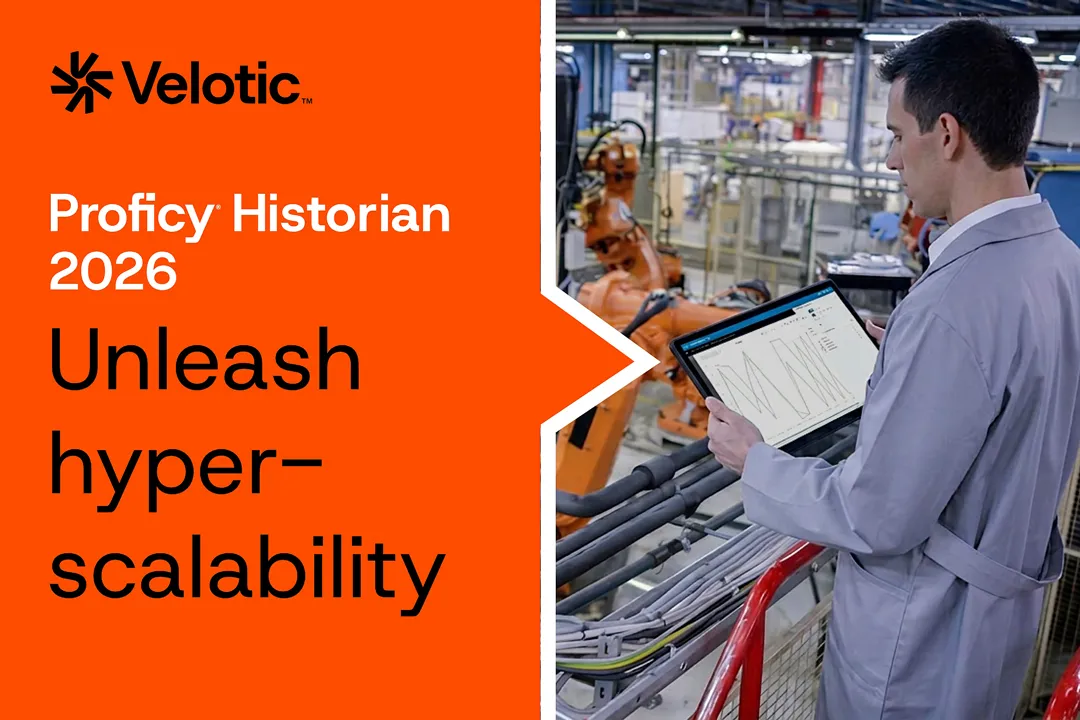
White paper
-
Everything you need to know about manufacturing execution systems
White paper -
Lean manufacturing in the age of the industrial internet
Connect machines and devices with people to access operational insight
White paper
-
Achieve Enterprise Scale in Specialty Chemicals
Discover how specialty chemical manufacturers can scale operations efficiently across multi-site environments. Download the executive white paper to explore strategies for digital transformation, operational agility, and enterprise-wide integration.
White paper
-
Battery Manufacturing: The Road to 2030 White Paper | Velotic
Explore the future of battery manufacturing in Velotic's white paper, "The Road to 2030." Download your copy for key insights and trends.
White paper -
Close the Productivity Gap with Overall Equipment Effectiveness (OEE)
Discover how food & beverage and CPG manufacturers are using OEE to reduce downtime, improve quality, and increase throughput. Download the white paper to learn how.
White paper
-
Digitizing discrete manufacturing processes white paper
Drive down costs and improve quality and output in discrete manufacturing. Download the whitepaper to learn how to digitize your processes.
White paper -
Diverse and Mixed Manufacturing
Learn how you can support your diverse manufacturing environments - whether process, discrete or mixed - with one MES across your entire business for greater efficiency and enterprise-wide optimization.
White paper -
Enabling Rapid Line Changeovers | Velotic
Learn how to use electronic work instructions to improve your changeover processes—paving the way to recover valuable production time, accelerate margin, and control product quality.
White paper -
Achieving Enterprise Scale in Manufacturing with Unified Solution Portfolios
Download the ABI Research whitepaper to see how unified solution portfolios help manufacturers scale Industry 4.0, reduce silos & accelerate digital transformation.
White paper
-
Food & Beverage / CPG Manufacturers: Taking meaningful steps towards a more sustainable future
This short white paper provides valuable insights and examples of how F&B/CPG companies can take meaningful steps towards sustainability by implementing technology solutions to help reduce water usage.
White paper