Proficy Smart Factory MES
Turn real-time production data into smarter decisions and better manufacturing performance
 Talk to an expert
Increase production performance
Increase capacity and throughput, improve workforce productivity, reduce production losses, and scale consistent execution across lines, shifts, and sites.
Maximize asset performance
Increase OEE, uptime, and asset utilization while reducing unplanned downtime and production losses to get more capacity and value from existing assets.
Improve compliance, quality & resilience
Improve quality, traceability, and compliance while reducing scrap, rework, and variability to protect production and strengthen operational resilience.
Accelerate transformation & innovation
Turn trusted manufacturing data into actionable insights to accelerate better decisions and scale successful improvements, analytics, and AI across the enterprise.
View the datasheet
How to get started

"MES gives us the ability to see every day and in real time, because we can see if something doesn't match correctly right away, and we get an alarm. We're now able to address it at that moment."
Core capabilities
Production management & execution
Digitize and manage production from work orders and routes to materials, labor, and operator activities. Enhanced route execution, operator qualifications, inventory management, and scheduler integration help increase throughput and execution consistency.

OEE & production performance
Gain real-time visibility into OEE, availability, performance, quality, downtime, and production losses. Automated KPI monitoring helps teams uncover lost capacity, prioritize improvements, and increase output using existing assets and resources.

Asset performance & downtime management
Monitor equipment performance and downtime in production context to uncover recurring losses and reliability issues. Predictive analytics help teams identify root causes, anticipate potential downtime, and improve asset utilization and operational resilience.

Quality management & compliance
Embed quality into manufacturing execution with real-time process monitoring, SPC, data collection, specifications, digital workflows, and approvals. Detect deviations earlier, standardize processes, reduce waste, and strengthen compliance across operations.
Traceability & product genealogy
Track materials, equipment, processes, production events, and operator activity throughout manufacturing. Digital genealogy and production records help teams investigate issues faster, improve traceability, support audits, and strengthen operational compliance.
Connected worker & digital workflows
Replace paper and tribal knowledge with digital work instructions, contextual documents, alerts, approvals, and configurable operator experiences. Help workers execute consistently, access critical information faster, and make better decisions on the shop floor.
Manufacturing analytics & AI
Turn contextualized manufacturing data into actionable intelligence with analytics, predictive models, and AI. MCP support, expanded GraphQL APIs, and Chat with Proficy MES help bring conversational AI and contextual insights directly into MES workflows.
Scalable & resilient MES architecture
Deploy Proficy Smart Factory MES as SaaS or on premises with cloud-native Kubernetes support. High availability, enhanced scalability, security controls, and streamlined deployment help improve uptime and support mission-critical operations at scale.
We're recognized
Velotic is recognized as a Representative Vendor in the 2026 Gartner® Market Guide for Manufacturing Execution Systems report.

Resources
View moreAll Resources
-
Webinar: Modernizing Intelligence Unleashed: Building the Data Foundation for AI-Powered Manufacturing
Webinar hosted by Packaging Strategies - learn how to establish a scalable data foundation that supports predictive insights, operational visibility, and future AI initiatives without requiring a complete technology overhaul.
Webinar -
Machine learning & predictive analytics guide for engineers
Learn how engineers can use machine learning and predictive analytics to improve quality, reduce downtime, and optimize manufacturing processes.
E-book -
Proficy's sustainability insights capabilities
Gain valuable sustainability insights with Proficy from Velotic. Improve your environmental impact and operational efficiency.
Data sheet -
Life is better in the cloud for process and discrete
Learn how Cloud MES helps manufacturers do more with less.
Infographic -
Unlocking food safety: understanding FSMA 204
The Food Safety Modernization Act (FSMA) 204 will significantly change how food manufacturers track products across the supply chain. With compliance requirements taking effect in July 2028, manufacturers of all sizes need to begin preparing now. Podcast series - episode 2 of 3
Video
-
Unlocking food safety: understanding FSMA 204
The Food Safety Modernization Act (FSMA) 204 will significantly change how food manufacturers track products across the supply chain. With compliance requirements taking effect in July 2028, manufacturers of all sizes need to begin preparing now. Podcast series - episode 3 of 3
Video
-
Unlocking food safety: understanding FSMA 204
The Food Safety Modernization Act (FSMA) 204 will significantly change how food manufacturers track products across the supply chain. With compliance requirements taking effect in July 2028, manufacturers of all sizes need to begin preparing now. Podcast series - episode 1 of 3
Video
-
SaaS vs. on-prem MES: driving smarter outcomes for F&B and CPG manufacturers
This webinar explores the practical business and operational implications of SaaS versus on-premises MES deployment models.
Webinar -
Everything you need to know about manufacturing execution systems
White paper -
Velotic looks to the future: AI enters the heart of SCADA, historian, and the digital factory
Novotek Italy explores how Velotic's AI could transform SCADA, historian, and industrial software through intelligent alarms, AI agents, and more.
Blog
Blog
-
Velotic looks to the future: AI enters the heart of SCADA, historian, and the digital factory
Novotek Italy explores how Velotic's AI could transform SCADA, historian, and industrial software through intelligent alarms, AI agents, and more.
Blog -
Rethinking MES deployment: cloud vs on-prem cost, risk & TCO explained
Blog -
Introducing Velotic: Pioneering the Future of Industrial Software (from GE Vernova Proficy, PTC ThingWorx and Kepware)
Velotic is a new independent industrial software company formed from the combination of Proficy from GE Vernova and ThingWorx and Kepware from PTC.
Blog -
Unlocking Strategic Potential in Food & Beverage and CPG: Redeploying IT Resources After the Cloud Transition
Unlocking Strategic Potential in Food & Beverage and CPG: Redeploying IT Resources After the Cloud Transition
Blog -
Trusted MES Tools for Full Traceability and Genealogy in Regulated Manufacturing
Learn how MES tools support full traceability and genealogy with forward and backward lineage, batch records, audit trails, recall support, and compliance readiness.
Blog -
Connected Worker Manufacturing: why connected workers don't need more data—they need context
Discover why successful Connected Worker manufacturing strategies focus on operational context—not just data—and how Proficy helps improve productivity, quality, safety, and workforce performance.
Blog -
Hyperscalability Isn’t About Storing More Data. It’s About Making Industrial Data Accessible, Contextualized, and AI-Ready Across the Enterprise.
Hyperscalability in manufacturing is no longer about storing more data. It’s about making industrial data accessible, contextualized, and AI-ready across the enterprise. Learn how modern historian platforms enable this shift.
Blog -
Practical Generative AI Use Cases for Industrial Operations
Explore practical generative AI use cases for industrial operations, including faster application creation, data exploration, troubleshooting, and decision support.
Blog -
How AI Is Reshaping Industrial System Integrators
Explore how AI is redefining industrial system integrators, driving internal productivity, and unlocking new recurring revenue through operational optimization.
Blog -
How structured scheduling delivers fast time-to-value in manufacturing planning
For many manufacturing companies, investing in digital production planning is driven by a clear ambition: improving visibility, strengthening decision-making, and gaining better control across operations.
Blog
Brochure
-
Proficy Scheduler Brochure
Learn how you can turn complex, constantly changing production environments into more stable, predictable, and profitable operations with Proficy Scheduler.
Brochure -
Battery Manufacturing Kit
Explore our Battery Manufacturing Kit and to see how a smart factory can optimize your manufacturing processes.
Brochure
Data sheet
-
Proficy's sustainability insights capabilities
Gain valuable sustainability insights with Proficy from Velotic. Improve your environmental impact and operational efficiency.
Data sheet -
Batch Execution Solutions
Streamline your batch processes with Velotic's execution solutions. Learn more about our innovative technology.
Data sheet -
Enhancing operations with Proficy CSense
Elevate your operational performance with Proficy CSense. Discover its benefits and improve your processes with Velotic’s solutions.
Data sheet -
iFIX Productivity Tools from Velotic
iFIX Productivity Tools are a suite of enhancements for iFIX that help lower the cost of ownership, improve usability, and make operations easier, faster, and more robust
Data sheet -
Proficy Historian Datasheet
Explore how Proficy Historian securely collects, stores, and contextualizes industrial data across on-premises, hybrid, and cloud environments.
Data sheet -
Proficy Scheduler - Optimize Your Scheduling
Streamline scheduling with Proficy Scheduler. Maximize efficiency and meet deadlines effortlessly.
Data sheet -
DNP3 OPC Driver Access
Access the DNP3 OPC Driver from Velotic. Supports smooth communication and integration for your control systems.
Data sheet -
Dream Report: Advanced HMI SCADA Reporting Solutions
Unlock advanced reporting capabilities with Dream Report from Velotic. Explore our solutions today.
Data sheet -
Enabling Connectivity with MTConnect OPC UA Driver
Discover in detail how the MTConnect OPC UA Driver 1.0 enhances connectivity and data integration with Velotic's innovative solutions.
Data sheet -
Enhance operations with CIMPLICITY HMI SCADA
Transform your operations with CIMPLICITY HMI SCADA solutions from Velotic. Explore our offerings today.
Data sheet
E-book
-
Machine learning & predictive analytics guide for engineers
Learn how engineers can use machine learning and predictive analytics to improve quality, reduce downtime, and optimize manufacturing processes.
E-book -
Modern HMI SCADA Guidebook for Efficient Operations
Read this ebook to explore tips and best practices for high performance HMI SCADA in your organization.
E-book -
The Next Destination for Manufacturing: A Cloud-Based MES | Velotic
Scale fast and maximize profitability with Velotic's Proficy Software & Services available on the AWS Marketplace.
E-book
Industry analyst report
-
Gartner Market Guide for Manufacturing Execution Systems
Industry analyst report
Infographic
-
Life is better in the cloud for process and discrete
Learn how Cloud MES helps manufacturers do more with less.
Infographic -
Life is Better in the Cloud
How Proficy Smart Factory Cloud MES helps plants do more with less.
Infographic
Video
-
Unlocking food safety: understanding FSMA 204
The Food Safety Modernization Act (FSMA) 204 will significantly change how food manufacturers track products across the supply chain. With compliance requirements taking effect in July 2028, manufacturers of all sizes need to begin preparing now. Podcast series - episode 2 of 3
Video
-
Unlocking food safety: understanding FSMA 204
The Food Safety Modernization Act (FSMA) 204 will significantly change how food manufacturers track products across the supply chain. With compliance requirements taking effect in July 2028, manufacturers of all sizes need to begin preparing now. Podcast series - episode 3 of 3
Video
-
Unlocking food safety: understanding FSMA 204
The Food Safety Modernization Act (FSMA) 204 will significantly change how food manufacturers track products across the supply chain. With compliance requirements taking effect in July 2028, manufacturers of all sizes need to begin preparing now. Podcast series - episode 1 of 3
Video
-
Proficy CSense industrial analytics demos
Explore six Proficy CSense demos showing how industrial analytics and machine learning can improve quality, process stability, and performance.
Video
-
How Camuzzi Gas modernized critical infrastructure with Velotic's Proficy software
How Camuzzi Gas modernized critical infrastructure with Velotic's Proficy Software
Video -
How Cascades Uses MES Software to Drive Real-Time Visibility, Quality & Continuous Improvement
Video -
Proficy HMI SCADA CIMPLICITY Demos
See Proficy HMI SCADA CIMPLICITY in action. This collection of video demos showcases key features, powerful operator tools, and advanced visualization.
Video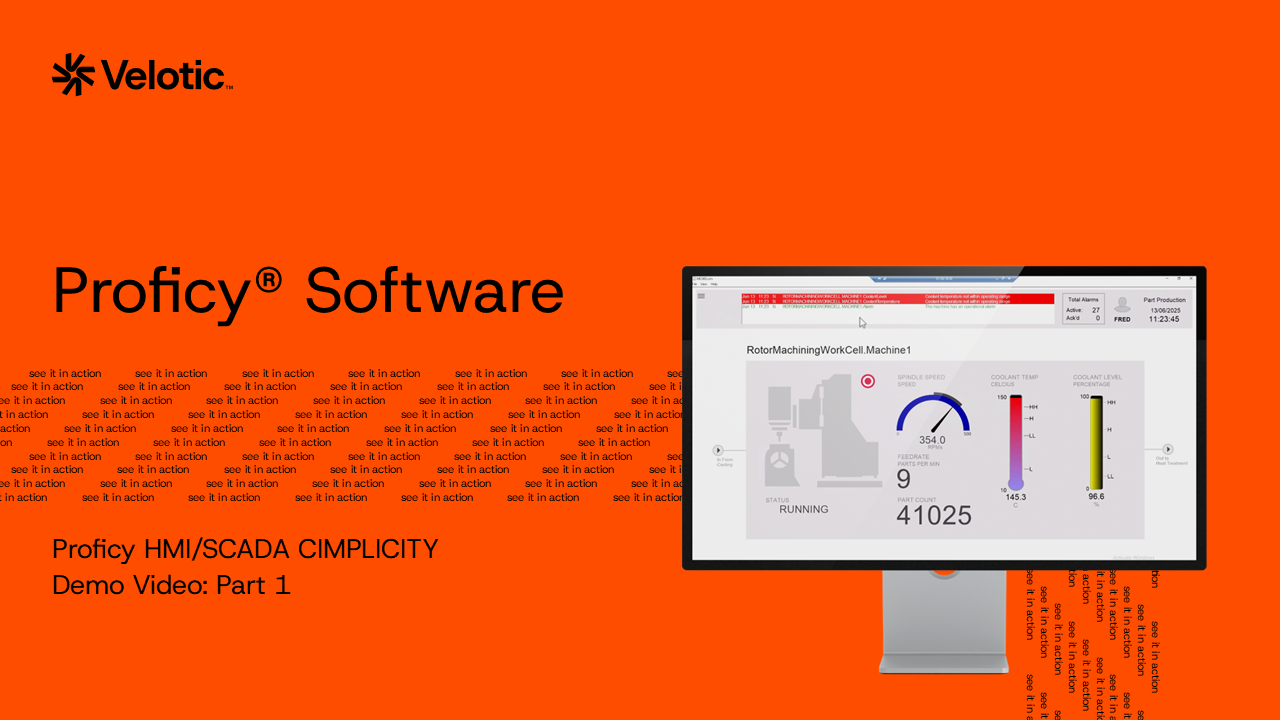
-
INS3 partner success story | how Proficy helps manufacturers grow
Watch how INS3 uses Proficy to help manufacturers improve quality, reduce costs, accelerate digital transformation, and achieve long-term business growth.
Video
-
Rain Engineering partner success story | how Proficy delivers complete manufacturing solutions
Hear how Rain Engineering helps manufacturers modernize operations with Proficy – improving quality, traceability, scheduling, and SaaS deployments
Video -
Access insights from wherever you are
Learn how manufacturers deliver operational intelligence anywhere through industrial data management, visualization, connected operations, and enterprise-wide visibility.
Video
Webinar
-
Webinar: Modernizing Intelligence Unleashed: Building the Data Foundation for AI-Powered Manufacturing
Webinar hosted by Packaging Strategies - learn how to establish a scalable data foundation that supports predictive insights, operational visibility, and future AI initiatives without requiring a complete technology overhaul.
Webinar -
Unlocking food safety: understanding FSMA 204
The Food Safety Modernization Act (FSMA) 204 will significantly change how food manufacturers track products across the supply chain. With compliance requirements taking effect in July 2028, manufacturers of all sizes need to begin preparing now. Podcast series - episode 2 of 3
Video
-
Unlocking food safety: understanding FSMA 204
The Food Safety Modernization Act (FSMA) 204 will significantly change how food manufacturers track products across the supply chain. With compliance requirements taking effect in July 2028, manufacturers of all sizes need to begin preparing now. Podcast series - episode 3 of 3
Video
-
Unlocking food safety: understanding FSMA 204
The Food Safety Modernization Act (FSMA) 204 will significantly change how food manufacturers track products across the supply chain. With compliance requirements taking effect in July 2028, manufacturers of all sizes need to begin preparing now. Podcast series - episode 1 of 3
Video
-
SaaS vs. on-prem MES: driving smarter outcomes for F&B and CPG manufacturers
This webinar explores the practical business and operational implications of SaaS versus on-premises MES deployment models.
Webinar -
Demo: Operationalizing AI on the Shop Floor
Watch this webinar to learn how manufacturers can apply AI on the shop floor with practical use cases for SCADA, MES, alarm analysis, AI assistants, and production data.
Video
-
OT for IT Webinar: Enabling Enterprise Scale in Industrial Operations
Watch our OT for IT webinar on achieving Enterprise Scale in industrial operations. Learn strategies for scalability, flexibility, standardization & integration.
Video
-
Connected Worker strategies: how to deliver context, visibility, and actionable insights across industrial operations
Learn how Connected Worker solutions improve productivity through contextualized industrial data, OT/IT convergence, operational intelligence, and AI.
Video
-
Proficy Tracker 2025: Production Tracking, Routing & Sequencing
See how Proficy Tracker enables real-time production tracking, automated routing and sequencing, order execution, traceability, and quality control.
Video
-
Proficy Historian 2026 Webinar Replay
See how Proficy Historian 2026 is evolving with cloud-native architecture, modern integrations, improved performance, and intelligent automation to help organizations capture more data, reduce operational complexity, and turn industrial information into actionable insights.
Video
White paper
-
Everything you need to know about manufacturing execution systems
White paper -
Lean manufacturing in the age of the industrial internet
Connect machines and devices with people to access operational insight
White paper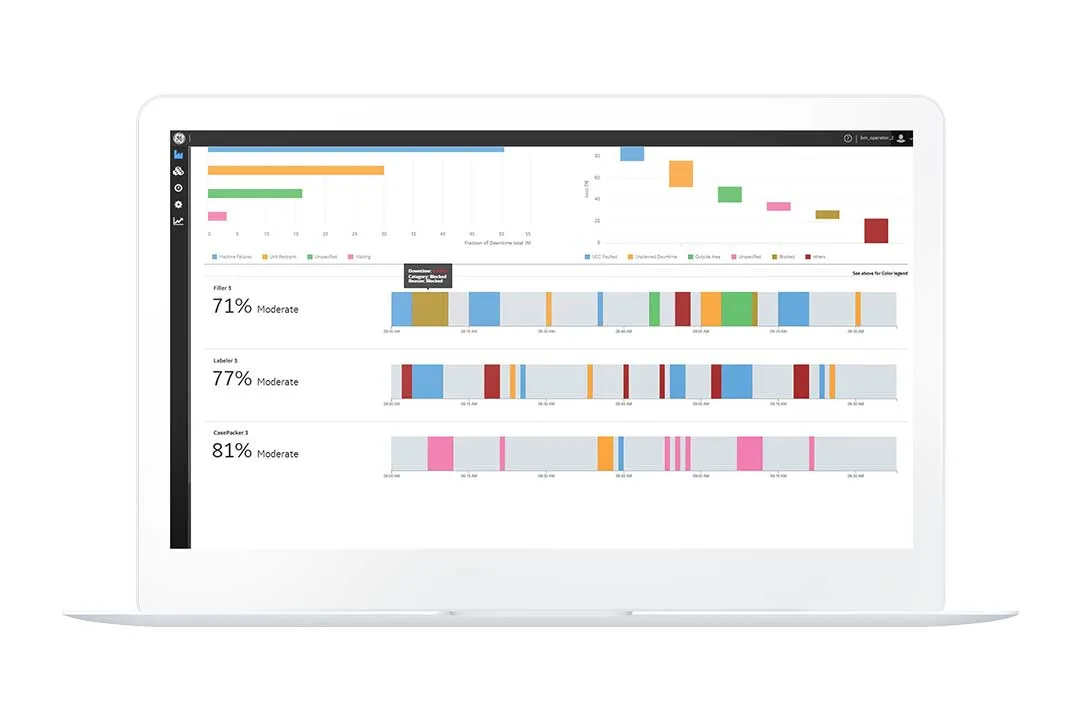
-
Achieve Enterprise Scale in Specialty Chemicals
Discover how specialty chemical manufacturers can scale operations efficiently across multi-site environments. Download the executive white paper to explore strategies for digital transformation, operational agility, and enterprise-wide integration.
White paper
-
Research Report: How AI and Analytics Are Transforming Manufacturing
Transform Manufacturing with AI & Analytics: Get data insights, real-world examples, & actionable strategies in this report.
White paper
-
Battery Manufacturing: The Road to 2030 White Paper | Velotic
Explore the future of battery manufacturing in Velotic's white paper, "The Road to 2030." Download your copy for key insights and trends.
White paper -
Close the Productivity Gap with Overall Equipment Effectiveness (OEE)
Discover how food & beverage and CPG manufacturers are using OEE to reduce downtime, improve quality, and increase throughput. Download the white paper to learn how.
White paper
-
Cutting Out Waste in Food, Beverage & Consumer Package Goods
Manufacturing & Digital Plant
White paper -
A Digital Approach to On-Demand Manufacturing
Read about strategies to tackle today's manufacturing challenges. Download the white paper today.
White paper -
Digitizing discrete manufacturing processes white paper
Drive down costs and improve quality and output in discrete manufacturing. Download the whitepaper to learn how to digitize your processes.
White paper -
Diverse and Mixed Manufacturing
Learn how you can support your diverse manufacturing environments - whether process, discrete or mixed - with one MES across your entire business for greater efficiency and enterprise-wide optimization.
White paper