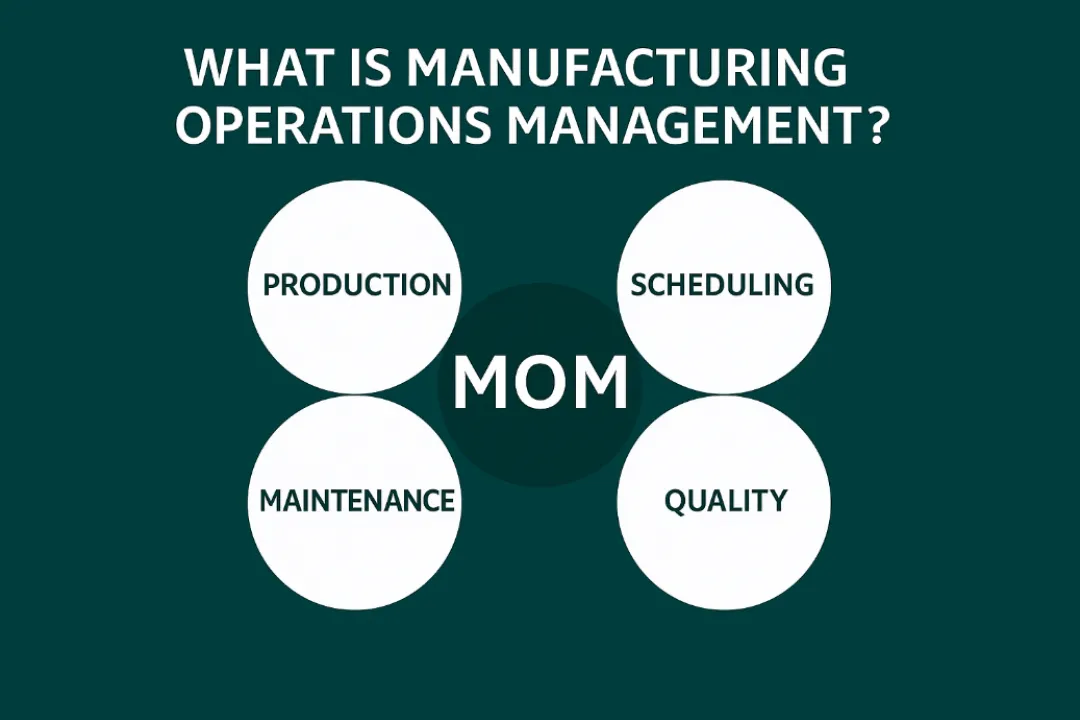
MOM software supports a wide range of manufacturing activities critical to operational success. According to the ISA-95 framework, key components include:
- Production Management: Managing the end-to-end manufacturing process, from raw material input to final product output. This includes optimizing workflows, reducing cycle times, and ensuring minimal production bottlenecks through continuous monitoring and automation.
- Production Planning & Scheduling: Ensuring efficient use of equipment, materials, and labor by aligning production plans with demand. MOM systems enable dynamic scheduling and sequencing to improve throughput, minimize changeovers, and respond quickly to disruptions.
- Quality Control: Monitoring and maintaining product quality by tracking key performance metrics, implementing automated inspections, and driving compliance with industry and regulatory standards. MOM systems provide data-driven insights that help identify quality trends and prevent defects before they escalate.
- Maintenance: Proactively managing equipment and infrastructure to help prevent unplanned downtime and improve asset longevity. MOM solutions integrate predictive maintenance capabilities, leveraging data analytics and machine learning to detect potential failures before they impact production.
By implementing manufacturing execution systems, businesses can automate and monitor these processes to enhance productivity and minimize waste.