- A Manufacturing Execution System (MES) is software that manages, monitors, and optimizes production on the shop floor in real time. MES connects machines, operators, and systems to provide actionable insights into how raw materials are transformed into finished goods.
- MES bridges the gap between enterprise systems and shop floor operations. It sits between automation systems and enterprise platforms like ERP, translating production plans into executable tasks and returning real-time production data back to the business.
- Real-time data collection is a core capability of MES. The system continuously gathers information from machines, sensors, operators, and other systems to monitor production status, resource utilization, and quality metrics.
- MES improves operational visibility and production performance. By analyzing live production data, manufacturers can track KPIs such as efficiency, throughput, and OEE, enabling faster decision-making and continuous improvement.
- Key MES capabilities include production scheduling, work order management, quality control, resource tracking, and traceability. These functions help manufacturers coordinate materials, equipment, and labor while maintaining compliance and product quality.
- MES enables end-to-end traceability and compliance. The system records detailed production history and material genealogy, supporting regulatory reporting, audits, and root-cause analysis.
- Modern MES platforms integrate with IIoT, analytics, and cloud technologies. These integrations allow manufacturers to unlock predictive insights, automate data flows, and scale digital manufacturing initiatives across multiple plants.
- When integrated with ERP and other enterprise systems, MES helps create a connected digital manufacturing environment. This integration aligns business planning with shop-floor execution to increase efficiency, reduce waste, and improve delivery performance.
Real-world MES software benefits
With the kind of results manufacturers are realizing with the use of MES, it’s no surprise that analyst research indicates that MES technology use is increasing at a rate faster than automation in general. This is largely due to its ability to help optimize production for operational excellence.
To help manufacturers leverage all this data available to them, GE Vernova developed Proficy Smart Factory Manufacturing Execution System (MES) software that drives higher efficiency, improves quality, and reduces costs associated with manufacturing by understanding conditions on the plant floor.
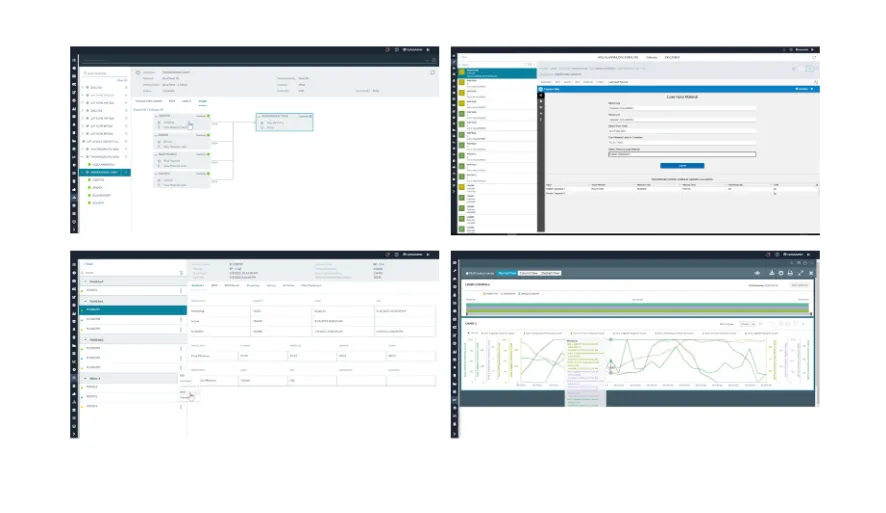
Velotic's MES software brings together the digital world with the physical world of manufacturing, delivering holistic performance management for today’s connected enterprise.
Image credit: Velotic
Toray Plastics (America), Inc., an American based subsidiary of Toray Industries, yielded some big results, such as significant savings in film recovery, increase in film productivity, and improved uptime by leveraging GE Vernova's MES technology. Toray Plastics also drove significant quality improvements by decreasing the amount of time for product traceability as well as lowering film defective rate.
GE Aerospace leverages Proficy Smart Factory MES to give unprecedented visibility all the way down to the routing level of their processes, helping the plant becomemore productive. Their on-time delivery improved by 10 points versus the previous year's baseline. This means more on-time delivery to customers.
As a well-known North American tissue manufacturing and conversion company, Cascades Tissue Group, leverages GE Vernova's MES to provide deeper insights into its operations. With a single view of production data, operators at Cascades Tissue Group can make informed decisions that help drive quality improvements and increase manufacturing efficiency across the various sites— critical for sustainable growth and a competitive edge.
With manufacturing organizations turning to MES to make data-driven decisions about their operations, the future of industrial processes promises greater efficiency and better opportunity for growth.
Continue reading
Blog
-
Velotic looks to the future: AI enters the heart of SCADA, historian, and the digital factory
Novotek Italy explores how Velotic's AI could transform SCADA, historian, and industrial software through intelligent alarms, AI agents, and more.
Blog -
Hyperscalability isn't about storing more data. It's about making industrial data accessible, contextualized, and AI-ready across the enterprise.
Blog -
Rethinking MES deployment: cloud vs on-prem cost, risk & TCO explained
Blog -
Introducing Velotic: Pioneering the Future of Industrial Software (from GE Vernova Proficy, PTC ThingWorx and Kepware)
Velotic is a new independent industrial software company formed from the combination of Proficy from GE Vernova and ThingWorx and Kepware from PTC.
Blog -
Unlocking Strategic Potential in Food & Beverage and CPG: Redeploying IT Resources After the Cloud Transition
Unlocking Strategic Potential in Food & Beverage and CPG: Redeploying IT Resources After the Cloud Transition
Blog -
Trusted MES Tools for Full Traceability and Genealogy in Regulated Manufacturing
Learn how MES tools support full traceability and genealogy with forward and backward lineage, batch records, audit trails, recall support, and compliance readiness.
Blog -
Close the Gap Between Insights and Action
Blog -
ThingWorx Supports CESMII Smart Manufacturing Interoperability
See how Velotic's CESMII integration building blocks for ThingWorx simplify interoperability, accelerate multi-site scale, and reduce custom integration work.
Blog -
Connected Worker Manufacturing: why connected workers don't need more data—they need context
Discover why successful Connected Worker manufacturing strategies focus on operational context—not just data—and how Proficy helps improve productivity, quality, safety, and workforce performance.
Blog -
Hyperscalability Isn’t About Storing More Data. It’s About Making Industrial Data Accessible, Contextualized, and AI-Ready Across the Enterprise.
Hyperscalability in manufacturing is no longer about storing more data. It’s about making industrial data accessible, contextualized, and AI-ready across the enterprise. Learn how modern historian platforms enable this shift.
Blog