A lot of literature exists that describe the behavior of PID loops and how to tune them. However, it still represents a challenge for many manufacturers as all the processes are different.
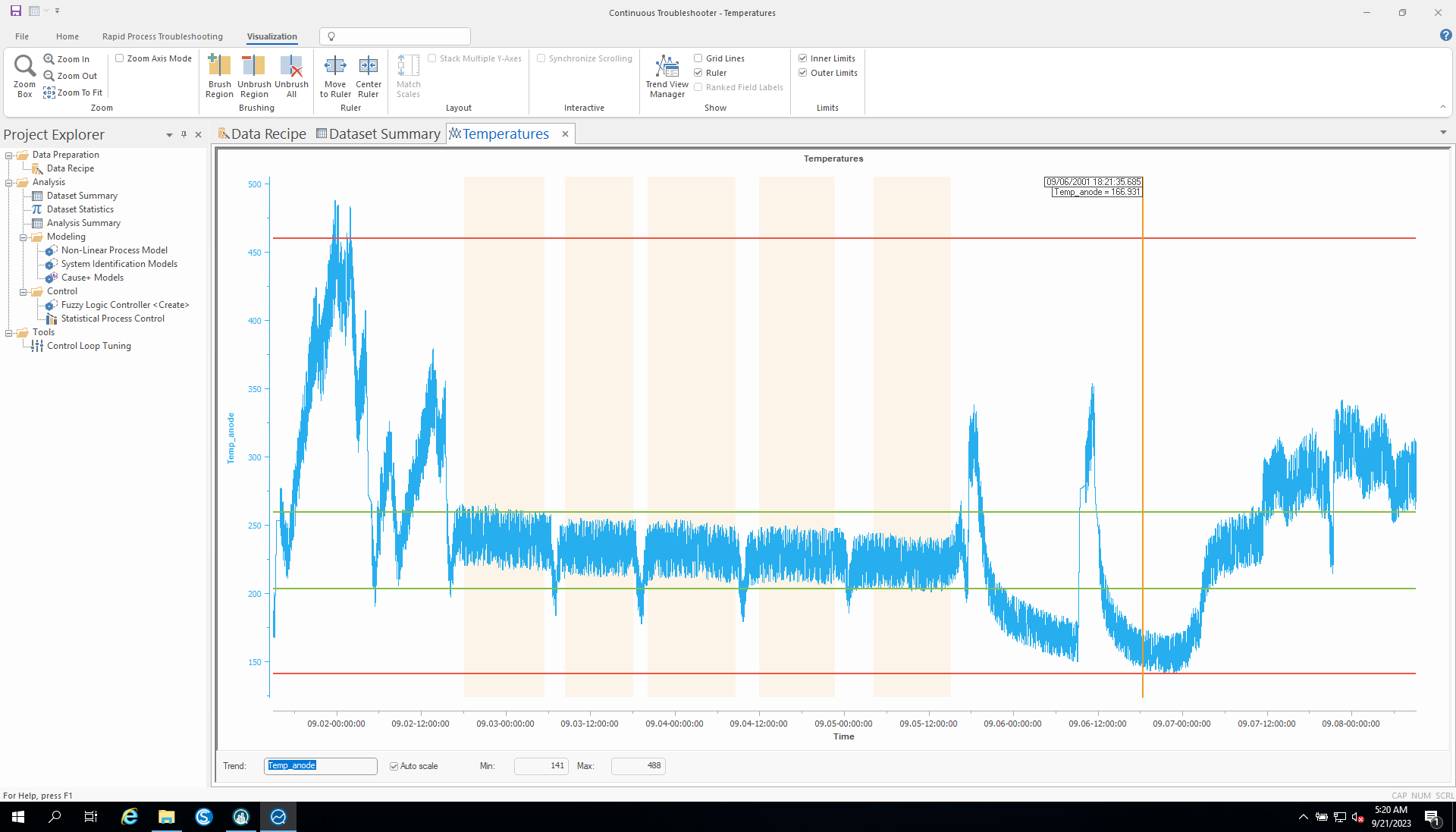
Process complexity is obviously a key factor. Heat jacketed devices such as kettles, dryers, reactors or pasteurization units can be hard to control. When steam is used, the heat transfer is not uniform, which might result in an overshoot during uptimes, making the control loops difficult to tune. Note that this is less prevalent using water. Traditional cascaded loops will only solve part of the problem. An advanced analytics system such as Proficy CSense can help by looking at historical data to create a model of the actual profile and recommend new settings accordingly. The model will take into account the change of parameters such as viscosity and steam pressure which affect the heat transfer coefficient and the flow pattern.
Two apparently similar machines might require different settings as they are equipped with sensors that will react to change in a slightly different way. This might be because they use different technologies – a glass vessel vs a steel vessel, which by nature have different inertia - or simply because their characteristics vary over time; for example, aging valves or deviating sensors.
Loop tuning therefore doesn’t happen once. If done manually it must take place on a regular basis and customized for each asset. Another option is real time monitoring using AI and Machine Learning.