MES vs SCADA – What’s The Difference? | Velotic

MES vs SCADA – What’s The Difference?

Understand the differences between MES and SCADA systems, as well as their core features, functions, and use cases.

Blog 10 min read
Key Takeaways

Key Takeaways

  • MES and SCADA serve different but complementary roles in manufacturing and industrial automation
  • SCADA focuses on real-time monitoring and control of equipment and processes
  • MES focuses on managing, tracking, and optimizing production execution on the shop floor
  • MES adds structure, context, and business logic to operational data collected by SCADA
  • When integrated, MES and SCADA improve visibility, efficiency, quality, and decision-making
  • Both systems play a critical role within the SCADA, MES, and ERP pyramid
Understanding MES vs SCADA in Modern Manufacturing

Understanding MES vs SCADA in Modern Manufacturing

Manufacturing and industrial operations rely on multiple software systems to monitor, control, and optimize production. Two of the most critical systems in this environment are Manufacturing Execution Systems (MES) and SCADA systems. While they are often mentioned together and sometimes confused, they serve distinct but complementary roles within the industrial automation stack.

Understanding MES vs SCADA, how they differ, and how they work together is essential for manufacturers looking to improve visibility, efficiency, quality, and decision-making across their operations. This article breaks down the difference between MES and SCADA, explains their core features and use cases, and shows how they fit into the broader SCADA, MES, and ERP pyramid.

What Is a Manufacturing Execution System (MES)?

What Is a Manufacturing Execution System (MES)?

A Manufacturing Execution System (MES) is software that manages, monitors, and coordinates manufacturing operations on the shop floor. MES sits between enterprise-level systems such as ERP and control-level systems like SCADA, translating business plans into executable production activities and tracking how those activities perform in real time.

MES software focuses on how production is executed, providing context, workflows, and traceability around people, materials, equipment, and processes. It helps manufacturers ensure that products are made correctly, efficiently, and in compliance with quality and regulatory requirements.

What Is SCADA?

What Is SCADA?

A SCADA (Supervisory Control and Data Acquisition) system is software used to monitor and control industrial equipment and processes in real time. SCADA collects data directly from machines, sensors, PLCs, and other control devices, allowing operators to visualize system performance and respond quickly to events.

SCADA systems focus on real-time control and operational awareness, providing immediate insight into what is happening at the equipment and process level across a facility or distributed sites.

Key Features and Functions of MES Software

What Are the Key Features and Functions of MES Software?

MES software provides a structured layer of intelligence above control systems, turning raw production data into actionable operational insight.

Real-Time Data Collection

MES aggregates production data from machines, operators, and systems to create a complete, contextualized record of manufacturing activity. This data forms the foundation for analysis, reporting, and continuous improvement.

Production Monitoring and Scheduling

MES tracks production progress against schedules, orders, and targets. It helps manufacturers sequence work orders, balance capacity, and adjust schedules based on real-world conditions.

Quality Assurance and Traceability

MES supports quality management by enforcing process rules, collecting inspection data, and maintaining full genealogy and traceability records. This is critical for regulated industries and root cause analysis.

Shop Floor Control

MES coordinates work instructions, equipment usage, and material movement on the shop floor. It ensures that the right steps are followed in the right order, reducing variability and errors.

Workforce Management

MES can track labor activities, certifications, and assignments, helping ensure the right people are performing the right tasks and supporting accurate labor reporting.

Process Automation and Standardization

MES enables standardized workflows and automated decision rules that reduce manual intervention and improve consistency across shifts, lines, and sites.

Key Features and Functions of SCADA Software

What Are the Key Features and Functions of SCADA Software?

SCADA software focuses on real-time visibility and control of industrial processes.

Real-Time Data Acquisition and Visualization

SCADA continuously collects data from field devices and displays it through HMIs, dashboards, and trends. Operators can quickly understand current conditions and system status.

Remote Control and Equipment Automation

SCADA allows operators to start, stop, and adjust equipment remotely. This capability is essential for maintaining safe and efficient operations, especially in large or distributed environments.

Alarm Management

SCADA systems detect abnormal conditions and generate alarms to alert operators. Effective alarm management helps teams respond quickly to issues and minimize downtime.

Reporting and Historical Data

SCADA systems store historical process data for analysis, troubleshooting, and compliance reporting. This data often feeds higher-level systems like MES for deeper context.

Real-World MES Software Benefits

Real-World MES Software Benefits

Real-world MES value becomes clear when manufacturers move from delayed, fragmented reporting to real-time visibility and consistent performance measurement. Customer experiences from Cascades Tissue Group and Papa John’s Food Service show how MES enables downtime reduction, efficiency gains, and smarter, data-driven decision-making.

Cascades Tissue Group used MES capabilities to gain a real-time pulse on production across multiple sites with different levels of automation maturity. By standardizing how downtime, efficiency, and quality were measured, Cascades was able to identify where losses were occurring and respond faster. Operators gained immediate visibility into production issues, OEE, and quality performance, replacing end-of-month reporting with real-time insights. This shift helped reduce production downtime, improve operational efficiency, and support more consistent product quality across lines and plants.

Papa John’s Food Service adopted a cloud-based MES to replace manual, paper-based tracking in its dough production operations. Real-time data capture, automated alerts, and full ingredient and batch traceability allowed teams to detect deviations as they occurred rather than after production was complete. As a result, Papa John’s improved data accuracy, reduced waste, addressed equipment downtime more quickly, and enabled teams to make decisions based on live production data instead of estimates or intuition.

Together, these examples illustrate how MES delivers practical, measurable benefits by improving visibility, standardizing performance metrics, and empowering teams to act on reliable data in real time.

Differences Between MES and SCADA

What Are the Differences Between MES and SCADA?

The difference between MES and SCADA lies primarily in scope, focus, and decision-making level.

SCADA is designed for real-time monitoring and control of equipment and processes. It answers the question: What is happening right now, and how do we control it?

MES is designed for managing and optimizing production execution. It answers the question: How should production be executed, and how well is it performing against plans and standards?

In short:

  • SCADA focuses on machines and processes
  • MES focuses on production workflows, quality, and performance
  • SCADA operates at the control layer
  • MES operates at the execution layer

Rather than competing, MES and SCADA are most effective when used together.

MES vs SCADA: Side-by-Side Comparison

MES vs SCADA: Side-by-Side Comparison

The table below summarizes the difference between MES and SCADA across purpose, functionality, users, and role within the manufacturing automation stack.

DimensionSCADAMES
Primary PurposeMonitor and control industrial equipment and processesManage, track, and optimize production execution
Core FocusReal-time operational visibility and controlProduction workflows, quality, and performance
Typical UsersOperators, control engineersOperations managers, production teams, quality teams
Data ScopeRaw, high-frequency equipment and process dataContextualized production, quality, and performance data
Time HorizonImmediate, second-by-secondShift-based, batch-based, and order-based
Decision LevelControl-level decisionsExecution-level decisions
Key FunctionsData acquisition, visualization, alarms, remote controlScheduling, quality tracking, downtime analysis, traceability
Relationship to EquipmentDirect interaction with machines, PLCs, and sensorsIndirect interaction via SCADA and control systems
Role in Automation StackControl layerExecution layer
Integration ValueProvides real-time operational dataAdds structure, logic, and business context
Common DeploymentPlant-level or distributed sitesPlant-level, multi-site, or enterprise execution layer
Integrating MES and SCADA Systems

Can You Successfully Integrate MES and SCADA Systems?

Yes. SCADA MES integration is common and increasingly essential in modern manufacturing environments.

When integrated, SCADA provides real-time operational data while MES adds structure, context, and business logic. SCADA captures what is happening at the equipment level, and MES uses that data to manage production execution, quality, and reporting.

Integrated MES and SCADA systems enable:

  • Seamless data flow from machines to production workflows
  • Faster decision-making with contextualized operational data
  • Improved traceability and compliance
  • Better alignment between operations and business objectives

This integration is a key foundation of digital manufacturing strategies.

SCADA, MES, and ERP Pyramid

SCADA, MES & ERP Pyramid

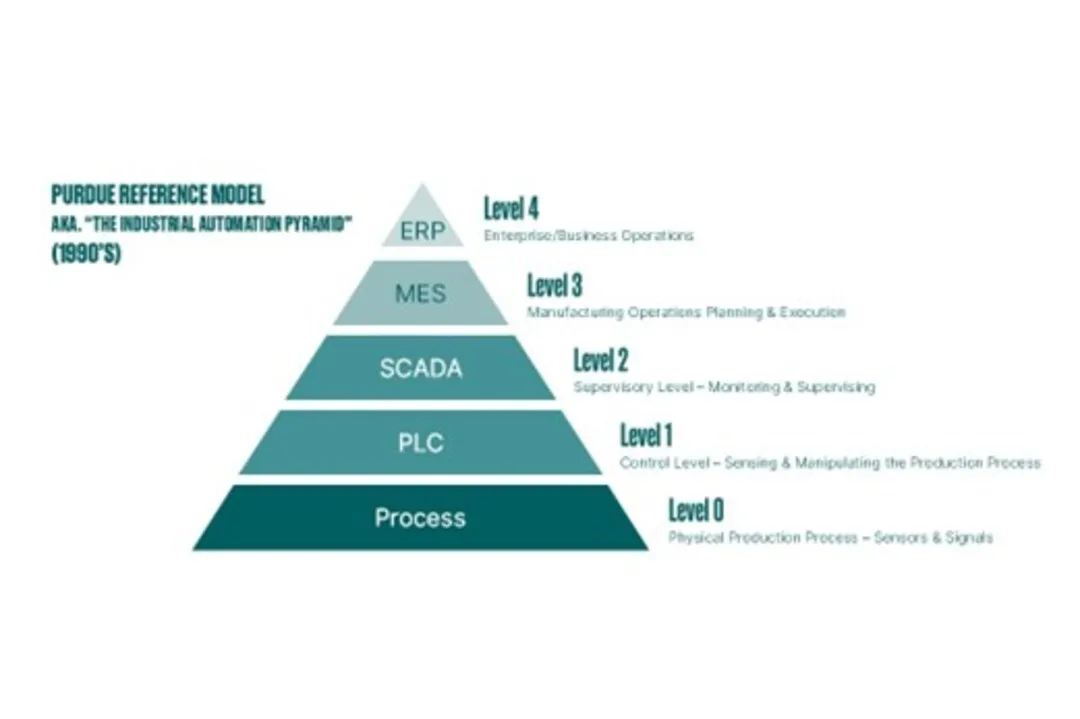
scada mes erp pyramid

The ERP MES SCADA pyramid illustrates how industrial systems work together across different levels of the organization.

At the bottom of the pyramid, SCADA systems interact directly with machines and processes, providing real-time control and monitoring.

In the middle, MES systems manage production execution, bridging the gap between control systems and enterprise planning.

At the top, ERP systems handle business-level functions such as planning, finance, procurement, and supply chain management.

Together, this layered architecture ensures that data flows from the shop floor to the enterprise and that business decisions are grounded in operational reality.

Choosing the Right MES and SCADA Approach

Choosing the Right MES and SCADA Approach

Selecting the right combination of MES HMI SCADA capabilities depends on operational complexity, regulatory requirements, and digital maturity. Many manufacturers adopt modular approaches that allow MES and SCADA systems to evolve together over time.

Modern manufacturing environments increasingly rely on flexible architectures, including cloud MES, to support scalability, multi-site visibility, and faster deployment while maintaining strong integration with existing SCADA systems and manufacturing software.

Final Thoughts on MES vs SCADA

Final Thoughts on MES vs SCADA

Understanding MES vs SCADA is not about choosing one over the other. It is about recognizing how each system contributes to a connected, efficient, and resilient manufacturing operation.

SCADA provides the real-time visibility and control needed to run industrial processes safely and effectively. MES provides the structure, intelligence, and traceability needed to execute production consistently and improve performance over time.

When combined and integrated effectively, MES and SCADA form the backbone of modern digital manufacturing.

Continue reading