Food Safety Modernization Act 204
Software can be a key enabler to abiding by these regulations which is crucial for maintaining compliance and protecting public health.
 Let us help you meet the FSMA 204 requirements. Contact Us.
In January 2023, the FDA issued the Food Traceability Final Rule, requiring additional traceability records for manufacturers, processors, packers, and holders of foods on the Food Traceability List (FTL). While targeting higher-risk products, this rule will likely influence broader food supply chain practices. It mandates rapid identification and removal of contaminated food, reducing foodborne illness risks. Companies must record key data elements (KDEs) for critical tracking events (CTEs) and share information with FDA within 24 hours. The rule applies to domestic and foreign firms supplying the U.S. and requires full compliance across the supply chain by 2028.
Velotic software provides a comprehensive integrated approach to meet the requirements.
Regulatory agencies and retailers are raising requirements for preventative strategies, pushing food safety and quality programs to emphasize improved processing and quality initiatives. A holistic, integrated approach enhances production control and fosters collaboration among suppliers, producers, customers, regulators, and consumers. Leveraging real-time intelligence, analytics, standard practices, and traceability delivers deep operational insights, helping identify risks early. This enables proactive, real-time corrective actions when processes deviate, ensuring consistent food safety, high quality, and productivity gains across the production environment.
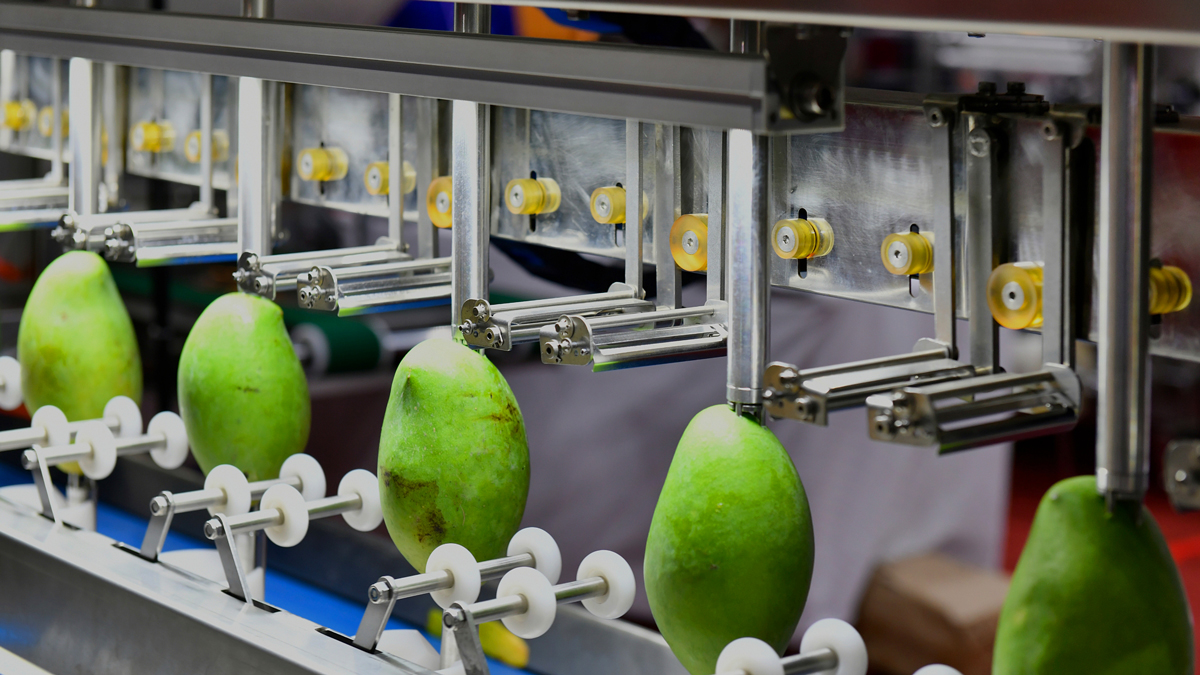
The Future of Food Safety: Core Elements of FSMA 204 Compliance
End-to-end transparency with Proficy Smart Factory – With Proficy Smart Factory software, F&B companies can accurately document what happened during all phases of production to help ensure compliance with new and existing regulations and use this data for continuous process improvement. In addition, the software provides:
- Holistic data collection and storage
- A structured model – data in context (batch, product type, grade, etc.)
- Enforced digitized work processes/SOPs
- A complete collection of relevant data (for operational technology/information technology)

Outcomes
End-to-end transparency with Velotic – With Velotic software, F&B companies can accurately document what happened during all phases of production to help ensure compliance with new and existing regulations and use this data for continuous process improvement.
Minimize food safety risks
Minimizing food safety risks requires a proactive, tech-driven approach. By enabling end-to-end traceability, utilizing AI-powered tools for rapid analysis, and fostering a strong food safety culture, organizations can prevent outbreaks, respond faster to recalls, and protect consumers effectively.

Enhance process control & consistency
Enhancing process control and consistency involves leveraging smarter tools, predictive analytics, and real-time data to streamline food safety operations. Strengthening root cause analysis and adopting modern inspection methods ensure uniform standards, reducing variability and improving outcomes.

Improving OEE and quality with analytics
Improving OEE and quality with analytics means using advanced data tools to identify inefficiencies, predict issues, and optimize production. AI-driven insights boost equipment effectiveness, reduce downtime, and enhance product quality by enabling faster, data-backed decisions.

Track and trace
Track and Trace leverages tech-enabled traceability to monitor products from farm to table. By capturing and analyzing data at every step, businesses can quickly address recalls, enhance food safety, and ensure compliance, while providing transparency and confidence to consumers.
Inventory and genealogy
Accurately document what happened during all phases of production To meet traceability requirements, it is important to have full knowledge of the origin and quantities of the materials flowing through the system, along with precise knowledge of when these materials were used in the process. Detailed documentation of material usage is particularly important when one lot of ingredients can flow to multiple batching systems over an extended period of production. •View genealogy links for serials/lots/batches with complete parent/child hierarchies represented •View details of each link (lot/serial) and where and when it is used
Digital transformation resources
All Resources
-
Top 5 Software Capabilities for Ensuring Food Safety
There’s a real opportunity for manufacturers to improve food safety during production with critical software capabilities that leverage real-time actionable knowledge and provide insight and analytics for enhanced control and consistency.
White paper -
Improving Process Transparency in Food and Beverage Manufacturing | Velotic
In today’s manufacturing environment, traceability is imperative for avoiding and minimizing quality issues that can result in product recalls and harm to the brand equity. Even with detailed HACCP (hazard analysis critical control point) procedures and SOPs (standard operating procedures) in place, it can be difficult to monitor compliance. This white paper discusses and provides a customer case study of how digitalization leveraging electronic work process management can greatly improve traceability by digitizing and documenting both manual and automated processes—and ensuring compliance with HACCP procedures and SOPs.
White paper -
Webinar: Modernizing Intelligence Unleashed: Building the Data Foundation for AI-Powered Manufacturing
Webinar hosted by Packaging Strategies - learn how to establish a scalable data foundation that supports predictive insights, operational visibility, and future AI initiatives without requiring a complete technology overhaul.
Webinar -
Nestlé Enhances Refrigeration Monitoring with iFIX & WIN-911 | Velotic
See how Nestlé uses iFIX and WIN-911 for mobile alerts on refrigeration alarms. Improve monitoring and response times.
Case study -
Royal Agio Cigars Connects Real-Time Information to Production, Improving Efficiency and Quality
See how Royal Agio Cigars connects real-time information to production processes, improving efficiency and quality. Explore the technology behind their success.
Case study -
Unlocking food safety: understanding FSMA 204
The Food Safety Modernization Act (FSMA) 204 will significantly change how food manufacturers track products across the supply chain. With compliance requirements taking effect in July 2028, manufacturers of all sizes need to begin preparing now. Podcast series - episode 2 of 3
Video
-
Unlocking food safety: understanding FSMA 204
The Food Safety Modernization Act (FSMA) 204 will significantly change how food manufacturers track products across the supply chain. With compliance requirements taking effect in July 2028, manufacturers of all sizes need to begin preparing now. Podcast series - episode 3 of 3
Video
-
Unlocking food safety: understanding FSMA 204
The Food Safety Modernization Act (FSMA) 204 will significantly change how food manufacturers track products across the supply chain. With compliance requirements taking effect in July 2028, manufacturers of all sizes need to begin preparing now. Podcast series - episode 1 of 3
Video
-
SaaS vs. on-prem MES: driving smarter outcomes for F&B and CPG manufacturers
This webinar explores the practical business and operational implications of SaaS versus on-premises MES deployment models.
Webinar -
Everything you need to know about manufacturing execution systems
White paper
Blog
-
Unlocking Strategic Potential in Food & Beverage and CPG: Redeploying IT Resources After the Cloud Transition
Unlocking Strategic Potential in Food & Beverage and CPG: Redeploying IT Resources After the Cloud Transition
Blog -
What is a Manufacturing Execution System (MES)?
Manufacturing Execution Systems (MES) ensure manufacturing operations are working to maximum efficiency. Read more to understand what MES is and how it works.
Blog -
Introducing Kepware Edge and Kepware Server
Learn more about Kepware’s Fall 2025 Release, including Kepware for Linux and a unified platform for Windows.
Blog -
Kepware Recognized as Outright Leader in Edge Connectivity by QKS
Get a free copy of the report and learn why Kepware is still the outright leader in connectivity.
Blog -
The Benefits of Paperless Manufacturing on Production Data
Discover the benefits of paperless manufacturing in streamlining production data management, improving accuracy, and enhancing traceability across operations.
Blog -
ThingWorx and Leela AI Team Up to Improve Production Performance Using Vision AI
Learn how this collaboration of Velotic ThingWorx and Leela AI boosts efficiency and performance to revolutionize production with Vision AI.
Blog -
Food & Beverage and CPG Manufacturers: Embracing Digital Evolution Together
Learn how food & beverage (F&B) and CPG manufacturers can keep their competitive advantage with better insights.
Blog -
Tackle Sustainable Food Manufacturing Goals with Existing Digital Systems
Learn how digital systems support sustainable food manufacturing. Explore Velotic's effective strategies.
Blog -
ThingWorx 10.0 and Microsoft Azure: Powering Industrial IoT From Edge to Insight
Discover how Velotic's ThingWorx 10.0 and Microsoft Azure transform industrial IoT by unifying edge-to-cloud data, AI, and analytics for smarter operations.
Blog -
An Overview of Industrial Communication Protocols
Learn how industrial automation protocols like Modbus, OPC UA, Ethernet/IP, and BACnet drive industrial automation with data reliability and speed.
Blog
Case study
-
Nestlé Enhances Refrigeration Monitoring with iFIX & WIN-911 | Velotic
See how Nestlé uses iFIX and WIN-911 for mobile alerts on refrigeration alarms. Improve monitoring and response times.
Case study -
Royal Agio Cigars Connects Real-Time Information to Production, Improving Efficiency and Quality
See how Royal Agio Cigars connects real-time information to production processes, improving efficiency and quality. Explore the technology behind their success.
Case study -
Church & Dwight Increases OEE by 6% with Proficy Smart Factory MES
Find out how Church & Dwight increases OEE by 6% using Proficy Smart Factory MES.
Case study -
Leading American Dairy Sees 50% Decrease in Quality Control Audit Time
Learn how a leading American dairy achieves a 50% decrease in quality control audit time and drives a digital transformation culture change
Case study -
Beijing Dart Streamlines Operations with Centralized Monitoring for Chinese Tobacco Manufacturers
See how Beijing Dart streamlines operations with centralized monitoring.
Case study -
Browar Warka Increases Bottling Line Efficiency with Velotic’s Proficy Software
Learn how Browar Warka increases efficiency on its bottling line while decreasing downtime by 39% with Velotic’s Proficy software
Case study -
Cascades Tissue Group Achieves Reliability and Predictable Manufacturing Performance
See how Cascades Tissue boosts manufacturing reliability with Proficy Software from Velotic.
Case study -
Chinese Tobacco Products Manufacturer Increases Efficiency by 4% and Reduces Waste by 5%
Discover how a Chinese tobacco products manufacturer improves efficiency by 4% and reduces waste by 5%.
Case study -
De Danske Gaerfabrikker (”The Danish Yeast Factories”) increased production capacity by 15-20% with Proficy Scheduler
Proficy Scheduler delivered value in just three months, helping De Danske Gærfabrikker increase productivity and capacity by 15–20%.
Case study -
Digital Transformation at Copersucar
Learn how Copersucar redesigned their processes with Velotic's Proficy HMI/SCADA, reformulating their operation and facilitating decision-making.
Case study
Infographic
-
Life is Better in the Cloud
How Proficy Smart Factory Cloud MES helps plants do more with less.
Infographic
Video
-
Unlocking food safety: understanding FSMA 204
The Food Safety Modernization Act (FSMA) 204 will significantly change how food manufacturers track products across the supply chain. With compliance requirements taking effect in July 2028, manufacturers of all sizes need to begin preparing now. Podcast series - episode 2 of 3
Video
-
Unlocking food safety: understanding FSMA 204
The Food Safety Modernization Act (FSMA) 204 will significantly change how food manufacturers track products across the supply chain. With compliance requirements taking effect in July 2028, manufacturers of all sizes need to begin preparing now. Podcast series - episode 3 of 3
Video
-
Unlocking food safety: understanding FSMA 204
The Food Safety Modernization Act (FSMA) 204 will significantly change how food manufacturers track products across the supply chain. With compliance requirements taking effect in July 2028, manufacturers of all sizes need to begin preparing now. Podcast series - episode 1 of 3
Video
-
How Cascades Uses MES Software to Drive Real-Time Visibility, Quality & Continuous Improvement
Video -
Transforming Papa Johns’ Dough Production with Proficy® Smart Factory Cloud MES, a Hosted SaaS Solution
Video
Webinar
-
Webinar: Modernizing Intelligence Unleashed: Building the Data Foundation for AI-Powered Manufacturing
Webinar hosted by Packaging Strategies - learn how to establish a scalable data foundation that supports predictive insights, operational visibility, and future AI initiatives without requiring a complete technology overhaul.
Webinar -
Unlocking food safety: understanding FSMA 204
The Food Safety Modernization Act (FSMA) 204 will significantly change how food manufacturers track products across the supply chain. With compliance requirements taking effect in July 2028, manufacturers of all sizes need to begin preparing now. Podcast series - episode 2 of 3
Video
-
Unlocking food safety: understanding FSMA 204
The Food Safety Modernization Act (FSMA) 204 will significantly change how food manufacturers track products across the supply chain. With compliance requirements taking effect in July 2028, manufacturers of all sizes need to begin preparing now. Podcast series - episode 3 of 3
Video
-
Unlocking food safety: understanding FSMA 204
The Food Safety Modernization Act (FSMA) 204 will significantly change how food manufacturers track products across the supply chain. With compliance requirements taking effect in July 2028, manufacturers of all sizes need to begin preparing now. Podcast series - episode 1 of 3
Video
-
SaaS vs. on-prem MES: driving smarter outcomes for F&B and CPG manufacturers
This webinar explores the practical business and operational implications of SaaS versus on-premises MES deployment models.
Webinar
White paper
-
Top 5 Software Capabilities for Ensuring Food Safety
There’s a real opportunity for manufacturers to improve food safety during production with critical software capabilities that leverage real-time actionable knowledge and provide insight and analytics for enhanced control and consistency.
White paper -
Improving Process Transparency in Food and Beverage Manufacturing | Velotic
In today’s manufacturing environment, traceability is imperative for avoiding and minimizing quality issues that can result in product recalls and harm to the brand equity. Even with detailed HACCP (hazard analysis critical control point) procedures and SOPs (standard operating procedures) in place, it can be difficult to monitor compliance. This white paper discusses and provides a customer case study of how digitalization leveraging electronic work process management can greatly improve traceability by digitizing and documenting both manual and automated processes—and ensuring compliance with HACCP procedures and SOPs.
White paper -
Everything you need to know about manufacturing execution systems
White paper -
Close the Productivity Gap with Overall Equipment Effectiveness (OEE)
Discover how food & beverage and CPG manufacturers are using OEE to reduce downtime, improve quality, and increase throughput. Download the white paper to learn how.
White paper